


Alberta Wildcraft
Labrador Tea - Wildcrafted Northern Bog Tea 15g
Labrador Tea - Wildcrafted Northern Bog Tea 15g
Couldn't load pickup availability
A traditional tea of the North.
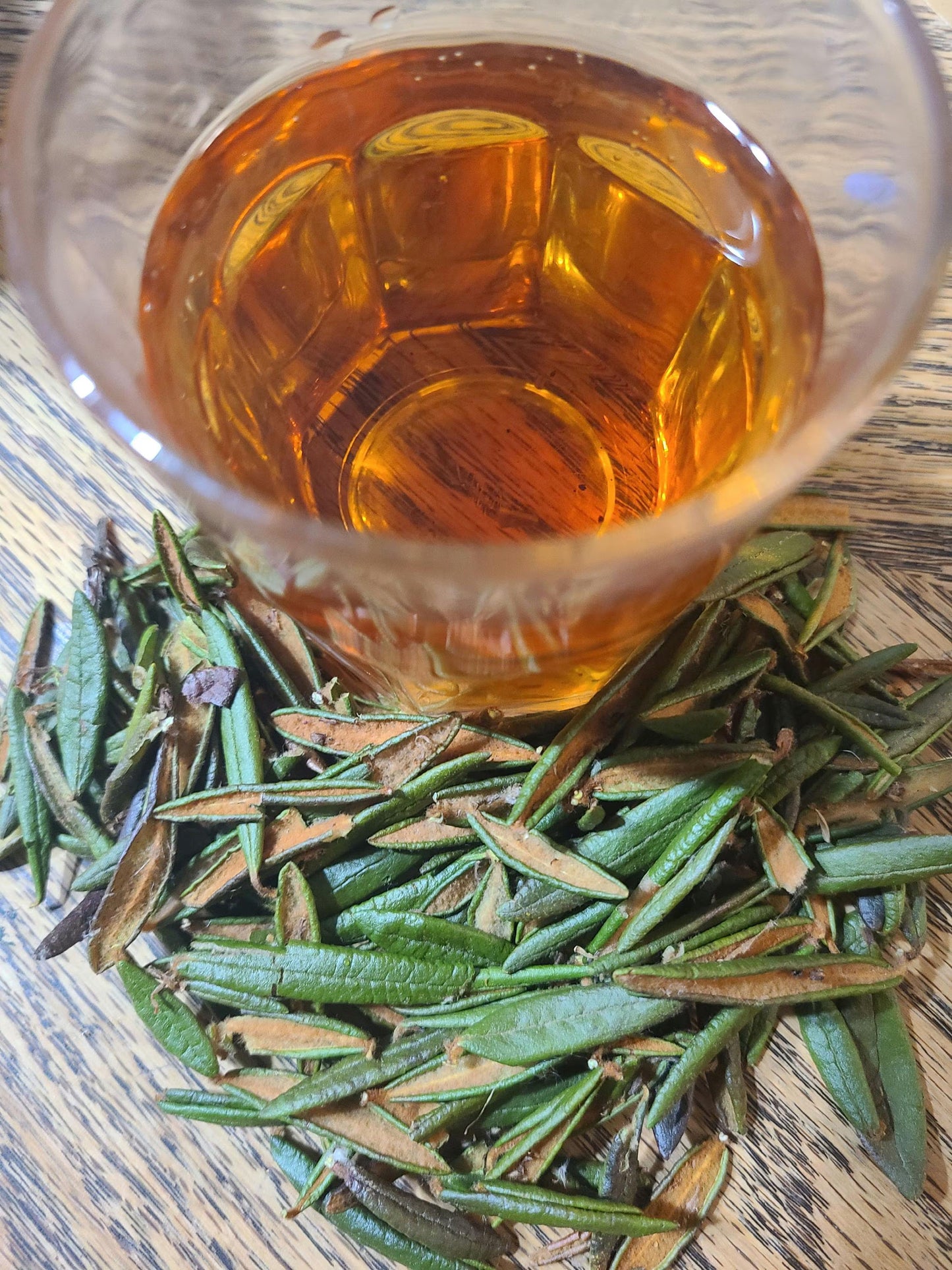
Wildcrafted Labrador Tea gathered from the boreal landscape and prepared slowly in the traditional way we were taught, producing a rich, aromatic infusion with a deep orange colour.
One northern plant.
Gathered from the boreal landscape.
Labrador Tea grows in bogs, muskeg and peatland environments across the North.
We gather it ourselves in small quantities, then air dry and prepare the leaves before packaging them here in Alberta.
It is a plant we treat with respect both in the field and in the way we prepare it.
Rich, aromatic and distinctly northern.
Labrador Tea has a flavour completely its own. The leaves produce a fragrant herbal infusion with earthy, resinous and softly evergreen notes.
When prepared slowly, the finished tea develops a deep orange colour and a much fuller character than a quick steep.
Prepared the way we were taught.
Labrador Tea has a long history across boreal and subarctic regions and has been gathered and prepared by Indigenous peoples for generations.
Our own preparation follows the traditional Cree method we were taught: a slow infusion rather than a quick steep, allowing the leaves to brew for about an hour until the tea develops a rich, deep orange colour.
That preparation is part of the experience of Labrador Tea. It takes more time, but this is not a plant we believe should be rushed.
Slow infused for a deep orange cup.
Labrador Tea is not something we prepare like an ordinary 5 or 10 minute tea. We make it the way we were taught: slowly, over time, allowing the leaves to fully infuse.
As the leaves slowly infuse, the water develops the rich, deep orange colour characteristic of the way we were taught to prepare Labrador Tea.
Once the water first begins to boil, reduce the heat right away. The goal is a very low, gentle simmer rather than a hard rolling boil. Strain the leaves before drinking.
A plant shaped by northern landscapes.
Labrador Tea grows low among the mosses and wet ground of bogs, muskeg and peatlands — landscapes that can look quiet from a distance but hold an incredible variety of northern plants.
Labrador Tea is best enjoyed in moderation.
Labrador Tea is a strong traditional plant and should be prepared and used thoughtfully.
- Use in moderation.
- Not recommended during pregnancy or breastfeeding.
- Not intended for daily, long-term use.
- Follow the preparation guidance provided with the product.
Labrador Tea
A traditional northern plant, personally wild harvested, slowly prepared and shared from Alberta Wildcraft.


BOREAL BOTANICALS + RESEARCH
There’s more in these plants than flavour.
Across our evergreen and boreal teas, we work with forest botanicals including white spruce, black spruce, eastern white pine, lodgepole pine, Labrador tea and western red cedar. Modern research has identified naturally occurring phenolics, flavonoids, terpenes, ascorbate and other plant constituents across these species.
WHY WE SIMMER FOR AN HOUR
Don’t treat forest tea like ordinary tea.
Needles, bark and leathery boreal leaves are tougher plant materials than a conventional tea leaf. Research on forest botanicals shows that time and temperature influence hot-water extraction. That’s why our preparation uses the lowest gentle simmer for approximately one hour rather than a quick 10–15 minute steep — giving hot water much more time to work through the plant material.
Explore the plants + research
Research on these species has examined their plant chemistry, traditional preparations and the compounds recovered through different extraction methods. Different blends contain different botanicals, so check the ingredient list on this product for the plants included in your tea.
- Black spruce hot-water extraction research
- Labrador tea hot-water infusion research
- Labrador tea brewing-time research
Research note: Information is provided for educational purposes and is not intended to diagnose, treat, cure or prevent disease.