

We’re Done Chewing Plastic: Why Spruce & Pine Resin Gum Back
Let’s get straight to it.
Most chewing gum sold in stores today is made from plastic.
Not sugar. Not plants. Plastic.
The chewy base in almost all commercial gum — the part that gives it that stretchy, rubbery texture - is called gum base, and it is commonly made from petroleum-derived polymers. In other words, synthetic rubber and plastic compounds.
And yes, it’s considered “safe” largely because chewing gum is not meant to be swallowed.
But let’s be honest - people swallow it.
Kids especially.
Anyone with children knows this. My own toddler would happily eat an entire pack of bubble gum if allowed. It’s sweet, flavoured, brightly packaged, and engineered to be irresistible.
And that’s exactly the problem.
What We’ve Been Chewing (and Why People Are Opting Out)
The global chewing gum industry pulls in over $16.5 billion a year, and most of that money is made selling a product whose main ingredient is synthetic gum base.
Common components of commercial gum base include:
-
Butadiene-styrene rubber
-
Isobutylene-isoprene copolymer (butyl rubber)
-
Polyethylene
-
Polyvinyl acetate
-
Paraffin
-
Petroleum wax
Read that list slowly.
Those are not ingredients anyone would intentionally choose to chew daily if they were listed plainly on the front of the package.
More and more people are realizing this — and they’re done with it. The shift away from plastic chews has already started. People are questioning what they put in their mouths, what their kids are chewing, and why something as simple as gum ever became a petroleum product in the first place.

Before Plastic Gum, There Was Tree Resin
Chewing gum didn’t start in a factory.
Long before commercial gum existed, people chewed tree resin — especially spruce pitch and pine pitch.
This wasn’t a novelty or a wellness trend. It was normal human behaviour.
People spending long days in the forest — families, hunters, trappers, homesteaders — would pull hardened resin from tree trunks and chew it. It cleaned the mouth, kept the jaw busy, and made long hours of work more comfortable.
This practice never truly disappeared.
One of the most common things I hear is:
“Chewing spruce gum is a core childhood memory.”

Pine Resin vs Spruce Resin: Why Both Matter
Pine and spruce resin are closely related and were traditionally used interchangeably as chewing gums.
That said, they each bring something unique.
Pine resin often has a warm, golden appearance and a rich forest aroma.
Spruce resin tends to be sharper, stronger, and more intense in flavour.
Together, they create a deeply satisfying, traditional chewing experience.
When harvesting, I still taste fresh sap straight from the tree — my kids have too. But raw sap isn’t ideal for long-term chewing. It’s extremely sticky, very strong tasting, and dissolves quickly.
That’s why resin gum is traditionally refined and prepared, not just pulled off the tree and chewed all day.
Why Raw Sap Isn’t the Same as Finished Resin Gum
Anyone who has chewed raw pitch knows:
-
It can be rock-hard
-
It can shatter in the mouth
-
It can stick aggressively
-
The flavour can be overwhelming
Turning resin into a true chewing gum takes time, experience, and careful preparation. Filtering, blending, and repeated testing are what turn raw pitch into something chewable, enjoyable, and consistent.
That’s the difference between a curiosity and a real gum.

Pure Resin Gum: Minimalism by Design
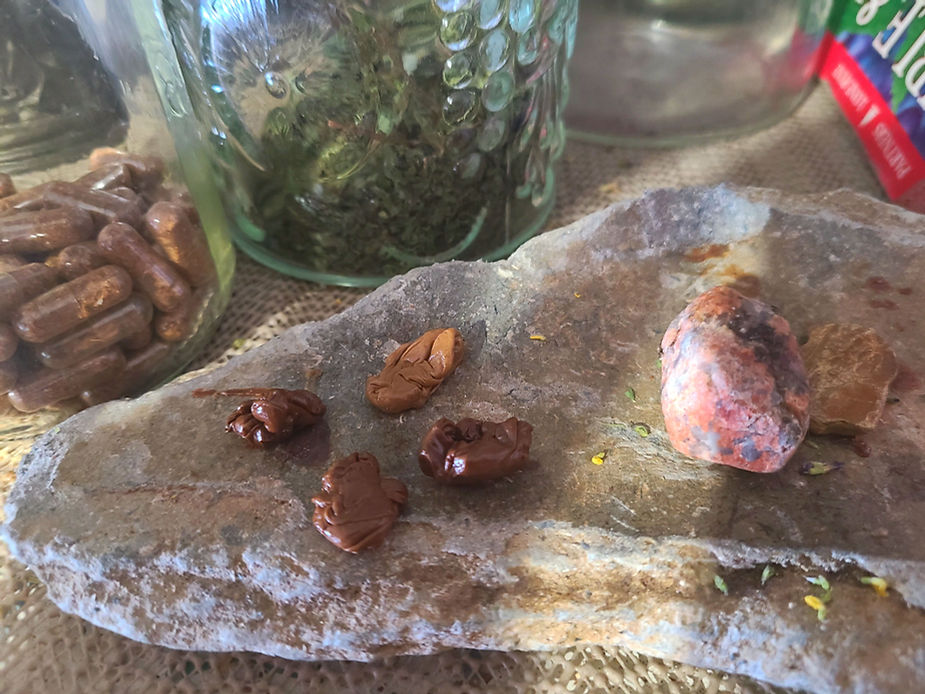
This gum is made using tree resin only — pine and spruce pitch — prepared carefully to create a firm, traditional chew.
No synthetic gum base.
No plastic polymers.
No artificial softeners.
Keeping it this simple isn’t a limitation — it’s intentional.
For generations, people chewed resin exactly this way. Strong, natural, and honest.
Traditional & Medicinal Uses of Chewing Resin
Historically and traditionally, pine and spruce resin were valued for more than taste alone.
Across cultures, chewing resin was used to:
-
clean teeth mechanically
-
freshen breath
-
support gum cleanliness
-
discourage odour-causing bacteria
Unlike mint-flavoured gums, which rely on artificial flavour to create a short-term “fresh” sensation, resin gum works through chewing action and naturally occurring plant compounds.
The clean feeling isn’t flashy. It’s subtle, gradual, and real.
Reusable Gum: Something Modern Gum Lost
One of the biggest surprises for people new to resin gum is that it’s often reusable.
Unlike commercial gum, which quickly breaks down and loses structure, resin gum holds together. Many people chew the same piece over multiple sessions — sometimes for days.
For habitual gum chewers, this means:
-
less waste
-
better value
-
fewer disposable habits
This is chewing gum as it existed long before convenience culture.
Why People Are Switching Now
This isn’t just nostalgia — it’s momentum.
People are:
-
cutting plastic wherever they can
-
questioning daily exposures
-
choosing minimal-ingredient products
-
looking for traditional alternatives that actually make sense
Spruce and pine resin gum fits naturally into that shift.
It’s plastic-free.
It’s simple.
It’s rooted in real human history.
And it works.
Chewing, Focus, and the Body
Resin gum is not soft candy gum.
It’s firmer, slower, and more engaging. Many people find that:
-
it keeps the mouth busy
-
it helps with focus
-
it replaces nervous habits
-
it gives the jaw real work
Chewing something substantial changes the experience entirely.
A Personal Note
I live with anxiety, and for years I dealt with repetitive finger-picking as a coping mechanism — hidden, constant, and hard to stop.
Chewing resin gum gave my body something else to focus on.
When my mouth is occupied, my hands relax. My posture softens. That alone has made this gum part of my daily life.

Who This Gum Is (and Isn’t) For
This gum is not:
-
sweet
-
flavoured
-
soft
-
bubble-blowing
It is:
-
firm
-
resinous
-
traditional
-
deeply satisfying
It’s for people who want something real — not candy disguised as gum.

A Return to the Original Chewing Gum
Spruce and pine resin gum isn’t new.
It’s older than plastic, older than factories, older than artificial flavouring.
More people are waking up, opting out, and choosing better.
If you grew up chewing spruce gum, you already know.
If you’re new to it, welcome — you’re part of the return.

And as always, with love,
From my family to yours !
sprucegum #pinegum #sprucechewinggum #sprucepitch #pinepitch #naturalchewinggum #masticgum #organicgum #wildgum #healthygum
This article is shared for educational and traditional-use purposes only and is not intended to diagnose, treat, or cure any medical condition.
Mastering Spruce Resin
A complete learning path from tree to traditional uses.
Start Here
1. What Is Spruce Resin? A Beginner’s Guide
2. How to Identify Spruce and Pine Trees for Resin Harvesting
3. How to Find Resin in the Forest – Training the Resin Eye
4. How to Harvest and Filter Resin Pitch
Chewing Spruce Gum
5. How to Chew Spruce Gum – Complete Beginner’s Guide
a) Is Spruce Sap really Worth 500$ Per LB?
6. Common Mistakes and Questions When Chewing Spruce Gum
7. Mastic Gum vs Spruce Gum
8. Why Spruce & Pine Resin Gum Is Making a Comeback
Traditional Uses of Spruce Resin
9. Medicinal Uses of Spruce and Pine Resin
10. Using Pine or Spruce Pitch for Waterproofing
Forest Recipes
11. Spruce, Pine and Fir Resin – Recipe Included
12. Wildcrafted Pine Pop – Make Natural Forest Soda
13. Spruce Herbal Tea
14. How to make Spruce Resin Soap